
Why Are Memorials Important?
When someone you love passes away there is often a strange feeling that follows. Life around you keeps moving, people go to work, children go to school and birthdays come around and of course ordinary days continue. But for the family who has lost someone things can feel completely different. A memorial can give those feelings somewhere to go. It doesn't have to be elaborate, it doesn't have to cost a lot and it doesn't even have to look a certain way. A memorial might be a photograph kept at home, a shelf, or simply a special place where family members can sit and remember. At its heart, a memorial gives a way to keep your loved one's memory present after they are gone.
What is the purpose of a memorial?
The purpose of a memorial is simple to remember and honor a person who has passed away. But the meaning behind that can be very different for every family. For some people a memorial provides a physical place to visit for others it creates a way to bring family members together. Some people find comfort in having something tangible that reminds the name of the person they lost. There is no single way to grieve, so that doesn't need to be a single way to create a memorial. A memorial can be traditional as a headstone or as personal as a favorite photograph sitting beside a cremation urn at home.
Memorials give grief a physical place
Grief can feel overwhelming because so much of it happens internally. You remember conversations; you think about things you wish you had said, or you miss someone's voice, laugh, habits, or presence. A memorial can give some of those emotions a physical place. Maybe you sit beside an urn and look through old photographs or maybe you visit a cemetery on a birthday anniversary. These memorials don't make grief disappear; that's not what a memorial is supposed to do. Instead, they can give you a quiet opportunity to acknowledge the loss and remember your loved one.
Memorials help keep memories alive
One of the hardest parts of losing someone can be the fear that memories will fade. You might remember their face clearly today, but years from now certain details might become harder to recall. A memorial can work like a reminder. A photograph can bring back a particular moment. A personalized urn can remind you of someone's personality or interests. A piece of jewelry made to hold a small portion of cremated remains can allow your family member to carry a private reminder with them. These physical reminders do not replace memories. They can just help you return to them. Sometimes the smallest things do this best.
Memorials bring family together
Grief can sometimes make people feel alone even when they are surrounded by family. Everyone handles loss differently; one person might just want to talk about the person constantly, while another might need quiet time. Someone might find comfort in looking for photographs or telling funny stories.
Memorials can celebrate a life not just a loss
When you talk about memorials it's easy to just focus on death. But a memorial can also be about the life someone lived. What did they love? What did they care about? What were they proud of? For example a person who has gardening might be remembered through a garden. Someone who loved traveling might have photographs from their favorite destinations displayed around their urn. A musician might be remembered through their instruments or photographs. The memorial becomes a reflection of the person rather than just a simple reminder that they are gone.
Why are cremation urns considered memorials?
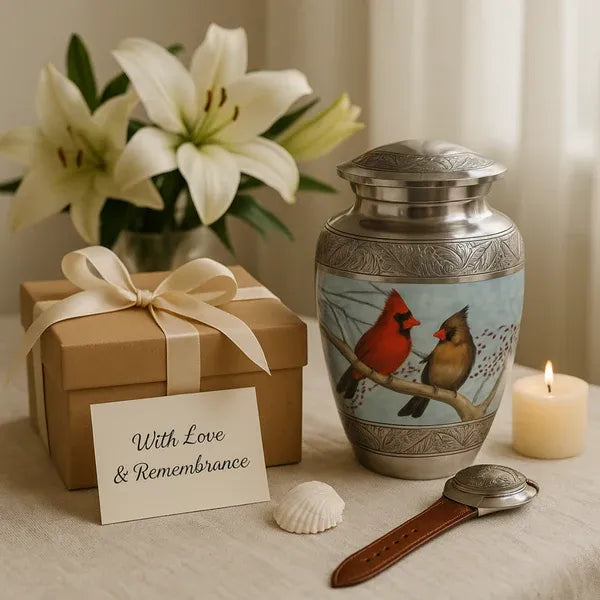
For families who choose cremation the urn can become a very important part of remembrance. A cremation urn gives you a physical place for cremated remains while also providing an opportunity to create a personal memorial. Some people choose a traditional urn and display it at home, others choose a customized design that reflects their loved one's interest or style. The memorial urn offers different types of cremation urns including adult urns and keepsake urns for different memorial preferences. A keepsake urn can be especially meaningful when several family members want to keep a small portion of the cremated remains. Instead of one person having the entire memorial different members of the family can have their own private way of remembering their loved ones.
Memorials can become part of everyday life
A memorial does not have to be something you just visit once a year. Sometimes it can quietly become part of your everyday life. Or a cremation urn might just sit on a shelf in the living room, a photograph might hang in the hallway while a memorial garden might become a place where you just sit down with your coffee. You don't have to stop living your life because someone you love is no longer yours. In fact many people having a memorial nearby allows their loved ones memory to become part of their new norm. There may be days you barely notice it. And then there might be difficult days when you look at it and suddenly remember everything.
Memorials gift future generations a connection
A memorial can also matter to people who knew the person only briefly and never ever met them. Think about your kids or grandkids who might grow up hearing stories about someone they never met and had a chance to know. Photographs or a memorial plaque or keepsake gives those stories tangible elements to connect with. You can say this was your grandfather's favorite place or your grandmother loved these flowers.
There is no right way to create a memorial
This is perhaps one of the most important things to remember. A memorial doesn't have to be expensive. It doesn't have to be traditional, and it doesn't even have to impress anyone else. It is a simple photograph beside a commercial urn that feels right to you that's enough. If you want a beautiful memorial display filled with photographs and flower sets, that's OK. Some families choose burial, some choose cremation and others scatter ashes. Others keep them at home or divide a portion among family members using keepsake urns.
Faqs
Q.1 Why are memorials important?
Ans. Memorials give your families a meaningful way to remember and honour someone who has passed away. They can provide a physical place for reflection and preserve memories.
Q.2 What is the purpose of a memorial after someone dies?
Ans. A memorial provides a lasting way to honour someone's life and remember their importance to family and friends.
Q.3 Does a memorial have to be a grave or a headstone?
Ans. No memorial can take many forms including a cremation or memorial jewelry or photographs.
So it's easy to think of a memorial as a physical thing like a stone or an urn. But the object doesn't matter much. It's what that object represents like it represents a person who has mattered. It represents families' stories , shared experiences and ordinary moments and all the little memories that make up a life. That's why memorials matter. They do not erase the pain of losing someone they just give love and memory somewhere to remain